About the Artist
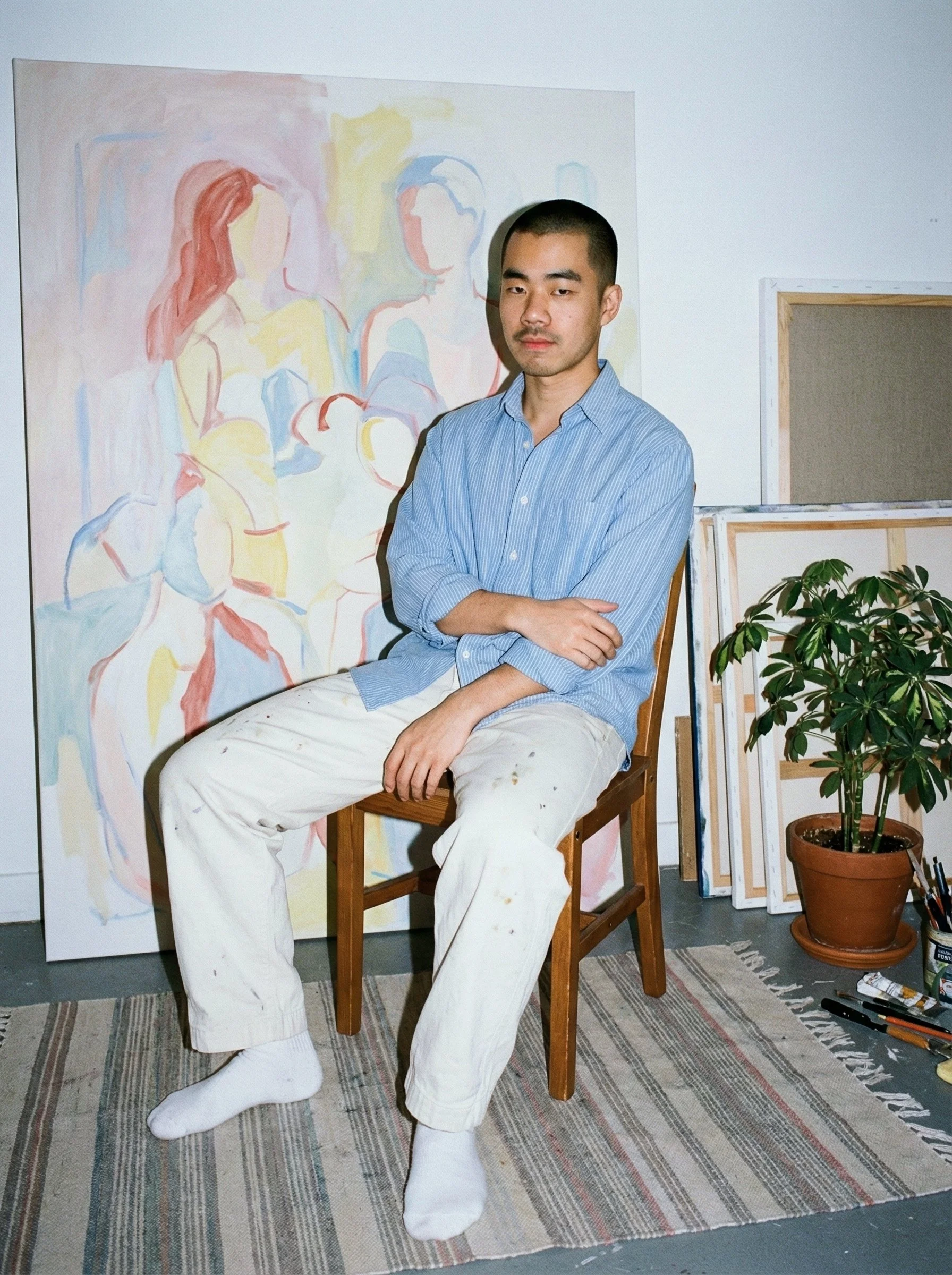
ALTSOY (b. 1996)
Shaped by a multicultural background spanning China and Australia, ALTSOY's practice is informed by the way he moves through — and observes — different worlds and relationships. His work grows out of a lifelong habit of locating himself inside other people: replaying conversations, noticing which parts of a stranger's gestures or emotions feel unsettlingly familiar, and asking why certain connections leave a mark that never quite fades. Rooted in years of life drawing, his practice began as observation and slowly turned inward, becoming a method for excavating where his own feelings originate and why specific people, encounters, or memories continue to surface in his mind, unresolved, until they are painted.
Working across acrylic, oil, oil pastel, and printmaking techniques such as lithography, ALTSOY moves fluidly between flattened, naive figuration and raw, textured, hand-worked surfaces. He treats the canvas — or the plate — as a space of incomplete memory, transforming fragments of real relationships into narrative scenes — imagined moments, symbolic gestures, invented settings — that give shape to feelings otherwise too diffuse to name. The figures he depicts are often people he has genuinely connected with — lovers, strangers, fragments of past relationships — but as memory erodes with time, he fills the gaps with his own projections, so that each portrait becomes neither fully them nor fully him, but something suspended between recollection and invention, each canvas unfolding like a story built from what remains.
Through this lens, the work threads together intimacy, loneliness, and self-mythology — weaving personal memory with broader questions of identity, desire, and how connection with others inevitably becomes a mirror for the self. Each series takes on its own visual language, shaped by the specific relationships and emotional terrain it revisits.
His recent series, Sad Boy Poem, turns this inquiry toward his own experience of intimacy and heartbreak, using recurring motifs — chamomile flowers, cigarette smoke, tarot cards — as a private visual vocabulary for desire, grief, and the difficulty of being truly seen, casting a contemporary portrait of longing, numbness, and the search for rescue in a world saturated with easy connection and lasting loneliness.